
The Lemna as a vegetable CBA (Cost-Benefit-Analysis) allows you to model the production, processing, and delivery costs of Lemna based on variables like yield per year, dry weight%, greenhouse overhead, number of harvests per week, and delivery distance. While the defaults model the Flemish market and growing season, the yields and costs are adjustable to adapt to your local scenario. The accompanying report describes the sources and assumptions behind the cost calculations, and a more detailed analysis of a case study where a Lettuce farmer model’s the costs and profitability of converting a small section of his greenhouse to growing Lemna, and delivering fresh, vacuum sealed bags to local restaurants.
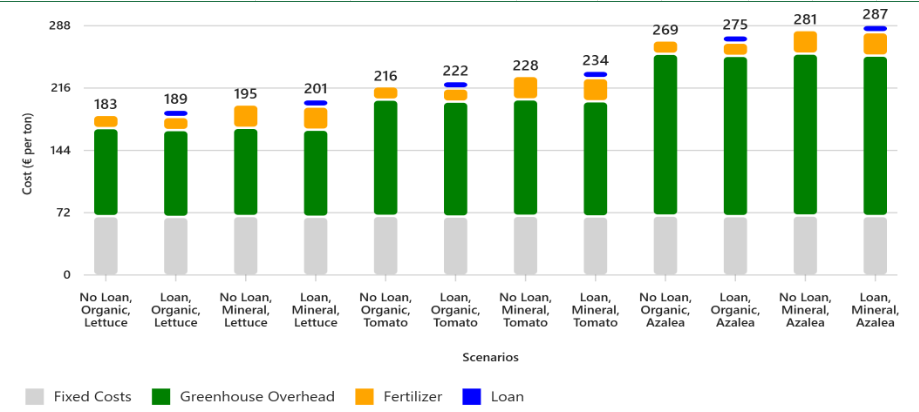
While fixed costs like foil linings and pumps amortized over their lifetime, electricity and labor run from 40-25% of the production costs, the largest variable determining the cost per ton is the greenhouse overhead.
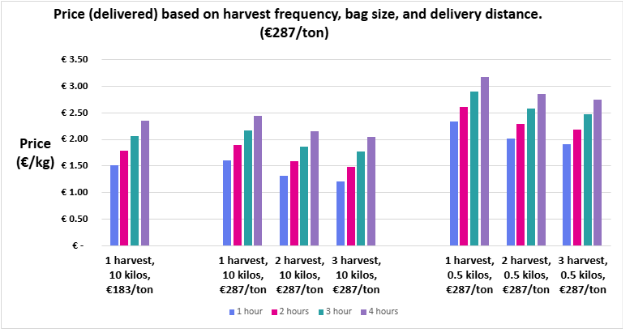
Ultimately, when looking at the final price of delivering Lemna to restaurants, the price ranged from € 0.96 to 3.17/kg, when comparing the highest and lowest production costs, 1-3 harvests a week, 0.5 and 10kg vacuum bag processing costs, and half hour to 4 hour delivery times. Ultimately, the production cost differences only added €0.10/kg, with the least impact on price, while each hour of delivery time added €0.28/kg, in a 100kg harvest, and bag size was a huge determining factor. Considering that delivered Lemna costs range from €1-3, bulk spinach prices range from €2-3, and organic spinach, kale or Swiss chard often falls in the €6-9/kg price range there’s a healthy margin for a farmer to establish a profitable price margin per kg of fresh Lemna.